




















Notes and essays
What Is Product Decision Intelligence? Where MercuriDash Fits In Product Landscape
MercuriDash is AI product decision intelligence software for consumer brands in fashion, beauty, home, and food and beverage. It helps product, merchandising and leadership teams decide which products to launch, extend, improve, replace or stop investing in.
Its primary role is evaluating which products deserve investment before detailed range planning, development and production commitments. It translates brand strategy and creative direction into product decisions, using analytics, market evidence and feasibility inputs alongside them. The same workflow supports decisions about existing products throughout their lifecycle.
MercuriDash evaluates products through four connected lenses: brand identity, strategic fit, market and demand evidence, and feasibility and margin. It brings creative, commercial and operational perspectives into one decision workflow—and helps teams work through what needs to change before a product should progress.
Where MercuriDash sits in the product software landscape
There is plenty of software for designing, researching, developing, planning and selling products. People often understand a new platform through whichever part of that process they know best.
Production teams recognise product lifecycle management software. Creative teams know design software and AI image generators. Merchandisers use assortment planning and demand forecasting tools. Commercial teams work with sales analytics.
MercuriDash connects those perspectives around a particular question: given this brand, its strategy, the available evidence and its commercial constraints, which products should progress—and why?
In workflow terms, MercuriDash typically sits:
- After initial brand strategy and creative direction, applying them to individual product decisions.
- Upstream of detailed range planning, product development and production commitments, evaluating the products that inform those activities.
- Alongside analytics, consumer insights and market intelligence, turning evidence into product decisions.
- At review points after launch, helping teams decide whether to extend, improve, replace or discontinue existing products.
This is an iterative process. An evaluation may send a concept back for creative refinement, expose a feasibility question or identify evidence that needs strengthening.
| Category | Primary role | Where MercuriDash fits |
|---|---|---|
| Brand strategy and creative direction | Establish the brand’s identity, ambition and creative direction | Applies that direction to individual product decisions |
| Creative software and AI design tools | Explore and visualise product possibilities | Evaluates concepts and guides further refinement |
| Analytics, trend forecasting and market intelligence | Provide evidence about performance, customers and markets | Uses that evidence alongside brand, strategy and feasibility |
| Consumer research and concept testing | Gather customer responses to products and ideas | Incorporates findings into a broader investment decision |
| Merchandising and assortment planning | Construct and balance a commercial range | Evaluates the products that inform the range, with feedback between both workflows |
| Demand forecasting | Estimate future demand | Assesses whether the demand evidence supports progressing a product |
| Product lifecycle management, or PLM | Coordinate detailed product development and product data | Helps establish which concepts deserve development and what needs resolving |
| ERP, inventory and PIM systems | Manage business operations, stock and product information | Uses relevant information to inform product evaluation |
These boundaries overlap. The distinction is the central job each category performs.
Product decision intelligence vs PLM software
Product lifecycle management software coordinates the work and information involved in developing products: specifications, materials, sourcing, costing, sampling, approvals and supplier collaboration. Some PLM platforms also support early planning and concept work.
MercuriDash’s primary role is upstream of detailed development. It helps establish what should progress into that process, why it deserves investment and which issues need resolving first.
That does not mean leaving feasibility until later. A concept that looks compelling can fail because of cost, materials, minimum order quantities or lead times. Bringing technical and production perspectives into evaluation helps teams identify those issues before committing to detailed development.
The distinction is one of emphasis: PLM coordinates product development; MercuriDash structures the evaluation that informs whether and how a product should progress.
Product decision intelligence vs merchandising and assortment planning
Merchandising, range planning and assortment planning tools help teams construct a commercially balanced product offering. They can support decisions about categories, options, price points, sizes, quantities and budget allocation, as well as which products to include.
MercuriDash focuses on the product decisions that feed that range.
For this brand identity, these strategic objectives, this market and these constraints, is this particular product a strong choice? Should it be extended, improved, replaced or removed?
That makes MercuriDash primarily upstream of detailed range allocation, while allowing feedback in both directions. A range plan may reveal a gap that prompts a new concept. Product evaluation may show that a proposed concept fills the gap but fails on brand fit, demand evidence or margin.
A slot in a collection is a reason to investigate a product opportunity. It is not, by itself, enough to justify investment.
MercuriDash helps ensure the products informing the assortment have been evaluated across all four lenses before more detailed commercial commitments follow.
Product decision intelligence vs demand forecasting
Demand forecasting estimates how much of a product customers may buy over a particular period. It can support new product launches as well as replenishment and inventory planning.
MercuriDash asks a broader question: does the available demand evidence, considered alongside brand fit, strategy and feasibility, justify progressing this product?
A product may have promising demand but weak margins. Another may fit the brand beautifully but depend on an untested customer assumption. A third may sell well while moving the business away from its strategic direction.
Demand is essential evidence. Product decision intelligence brings it into the full decision.
Product decision intelligence vs creative software and AI design tools
Creative software helps teams explore and express possibilities. This includes traditional design tools, 3D visualisation and AI product design tools.
MercuriDash helps teams evaluate those possibilities and decide what to do next.
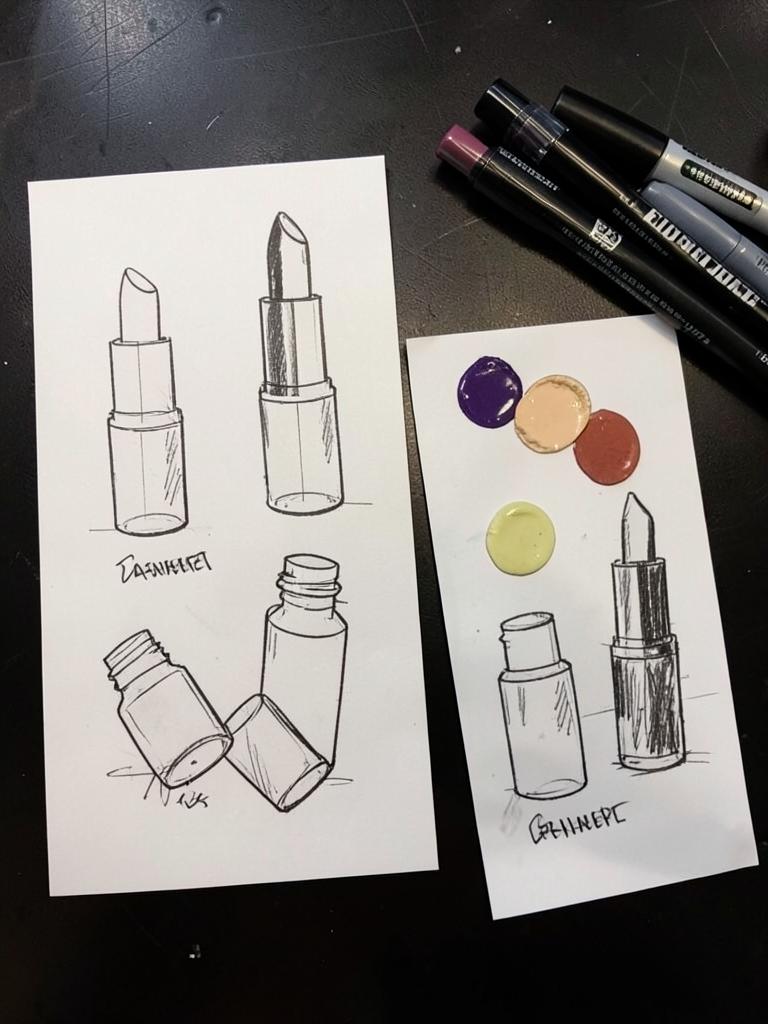
You can develop initial concepts by hand, in design software or with AI, then bring them into a structured evaluation. A strong visual idea still needs to make sense for the brand, market, strategy and commercial constraints.
Creative exploration can also continue after evaluation. If a concept needs improving, the findings help define what should change. The revised concept can then be evaluated again.
The relationship is iterative: creative work produces possibilities; evaluation guides which possibilities deserve further development.
How MercuriDash applies brand strategy and creative direction
Founders, brand strategists and creative directors own the brand vision. MercuriDash helps translate that vision into product decisions.
Your confirmed brand baseline provides the identity, principles and rules against which products are evaluated. Product strategy supplies the direction: what the business wants its products to achieve.
That direction might involve extending a recognisable strength, entering an adjacent category or improving the performance of an existing range.
MercuriDash brings those intentions into the evaluation of individual products. It can also expose ambiguity: if a concept’s brand fit is unclear, the team may need to clarify the underlying principle.
Initial brand strategy and creative direction therefore provide the foundation for evaluation. They can also be refined as teams work through product decisions.
Product decision intelligence alongside analytics and market intelligence
Sales analytics, trend forecasting, consumer insights and market intelligence provide evidence. MercuriDash uses that evidence in product decisions.
This is a relationship alongside analytics rather than a simple step after it. Evidence can enter at any point: during concept evaluation, after launch or when an established product begins to underperform.
The distinction is between understanding a signal and deciding what it means for a particular product.
A rising trend does not automatically make a concept right for your brand. Falling sales do not automatically mean a product should be discontinued. Strong customer engagement does not establish that a concept can achieve the required margin.
MercuriDash considers the evidence through all four lenses, making the reasoning, assumptions and unresolved questions part of the decision.
Product decision intelligence vs consumer research and concept testing
Consumer research and concept testing help establish how customers respond to an idea, which attributes matter and how concepts compare.
Those findings can strengthen a product evaluation. They do not settle every question.
A popular concept can still conflict with brand identity, strategic priorities or production constraints. Equally, weak or incomplete evidence may indicate a need for further research before making a commitment.
MercuriDash incorporates customer research where available and helps identify which assumptions need testing. Its evaluation should make clear what is supported, what is uncertain and what additional evidence could change the decision.
AI product development vs a structured decision workflow
“AI product development” covers many different activities, including idea generation, visualisation, research, specification drafting and analysis.
MercuriDash’s role within AI product development is structured product evaluation and improvement for consumer brands.
A general-purpose AI assistant can help explore an idea or analyse information. MercuriDash organises that work around a confirmed brand baseline, strategic objectives, market evidence and commercial constraints.
The value lies in a repeatable workflow: evaluating products against consistent criteria, explaining the reasoning and working through what needs to change.
A decision layer across the product lifecycle
MercuriDash’s primary role is evaluating products before further investment. That includes both new concepts and products already selling.
Product, merchandising and leadership teams can use the same decision framework to:
- Evaluate a new product concept before committing to detailed development.
- Decide whether to extend a successful product.
- Investigate whether an underperforming product should be improved.
- Compare a refresh with a replacement.
- Reassess whether an existing product still deserves support.
For new products, this often happens before detailed range planning and development. For existing products, it happens when the business needs to reconsider its next investment.
The category remains the same: AI product decision intelligence. The decision can occur at different points in the lifecycle.
Do you need to replace your existing product software?
Established brands do not need to replace their creative, planning, development or analytics systems to adopt a clearer product decision process.
MercuriDash provides a shared basis for evaluating what should progress and what needs resolving. That decision can then inform work in the systems teams already use.
The practical relationship depends on the workflow and available data exchange. Using tools alongside one another does not require every system to have a direct integration.
Every product decision is a business decision
A product should earn the investment made in it. Visual appeal, a favourable trend or an available slot in the range can each contribute to the case, but none is sufficient alone.
MercuriDash brings brand identity, strategic fit, market and demand evidence, and feasibility and margin into one product decision workflow.
MercuriDash is AI product decision intelligence software for consumer brands. Its core job is helping product, merchandising and leadership teams decide which products to launch, extend, improve, replace or stop investing in—and what needs to change before progressing.
Those decisions shape the growth, competitiveness and long-term value of the business.
Explore MercuriDash to evaluate your next product launch or existing range.