




















Notes and essays
Product Decision Intelligence: Deciding Which Products Deserve Investment
Speed matters in product development. Reducing research time, shortening feedback cycles and making concepts easier to explore can all help a business move forward.
But a faster process still needs to lead somewhere valuable. A product can reach production sooner and still struggle to sell. A concept can be inexpensive to generate and expensive to manufacture. A collection can arrive on schedule while doing little to strengthen the brand.
MercuriDash is AI product decision intelligence software for consumer brands in fashion, beauty, home, and food and beverage. We help teams decide which products to launch, extend, improve, replace or stop investing in—and work through what needs to change before progressing.
Efficiency is part of that work. The larger purpose is to improve the decisions that shape growth, competitiveness, margin and long-term brand value.
Here are three reasons we push beyond speed gains.
1. Faster product development should serve better business outcomes
Efficiency measures are useful. How long did the research take? How many concepts could the team explore? How quickly did an idea move into development?
They tell you how effectively work is moving. They do not, on their own, tell you whether the business is investing in the right products.
A consumer brand also needs to ask:
- Does this product give customers a compelling reason to choose us?
- Does it strengthen what the brand stands for?
- Does it advance our product strategy?
- Is there credible evidence of demand?
- Can we deliver it within our commercial constraints?
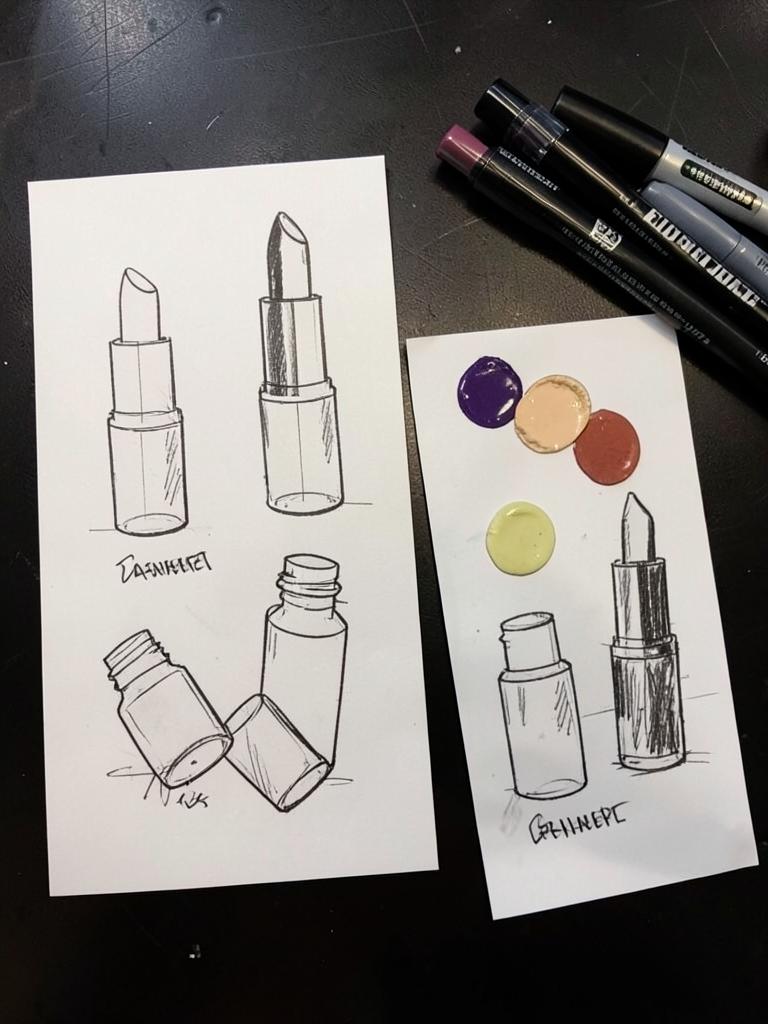
Consider a beauty brand deciding whether to extend a successful range. Generating ten packaging concepts quickly may help the team explore possibilities. The consequential decision is which extension deserves backing, whether it offers something distinctive and whether its likely demand and margin justify the investment.
The same applies to a fashion collection, a homeware refresh or a new food product.
Product decision intelligence connects the work of developing products to the business reasons for developing them.
For MercuriDash, that means evaluating new concepts and existing products through four connected lenses: brand identity, strategic fit, market and demand evidence, and feasibility and margin.
The aim is to help the team progress products with a stronger case for investment—and identify those that need changing or reconsidering before more resources are committed.
2. Product decisions need creative, commercial and operational perspectives together
A product can look promising through one lens and weak through another.
A concept may be creatively distinctive but difficult to manufacture. It may have attractive margins but little reason for customers to choose it. It may follow a growing trend while pulling the brand away from the identity that made it valuable.
Specialist expertise remains essential. Designers, merchandisers, production teams, market analysts and brand leaders bring different knowledge to the decision.
The challenge is bringing those perspectives together early enough to influence the product.
When evaluation is fragmented, each team can reach a reasonable conclusion using different evidence and priorities. One sees creative potential. Another sees a margin opportunity. Another sees a production risk. The disagreement becomes visible only after substantial work has already taken place.
MercuriDash structures the evaluation around the same product and the same four lenses, making the relationships between them part of the decision.
For example, a lower-cost material might improve margin while weakening the quality customers expect from the brand. A more distinctive specification might strengthen brand fit while introducing a lead-time problem. Strong demand evidence might justify investigating a constraint further, without making that constraint disappear.
The value lies in understanding these trade-offs together.
Bringing perspectives into one evaluation does not remove judgement or guarantee agreement. It gives the team a clearer basis for discussing what is supported, what is uncertain and what must change.
It also helps challenge selective use of evidence. A favourable trend should not settle a decision while an inconvenient cost or customer signal goes unexamined.
3. Evaluation should shape and improve the product as it develops
Many product workflows involve repeated handovers: research informs a brief, the brief informs concepts, concepts move into development, and later reviews reveal what needs changing.
Some sequencing is necessary. Physical sampling, testing, supplier confirmation and production have real dependencies. But important evaluation questions can be brought into the work earlier and revisited as the concept develops.
Strategy can guide the concept from the beginning. Commercial constraints can shape the specification while changes are still practical. Evaluation becomes part of development, giving teams a closer relationship between analysis, creation and improvement.
A useful evaluation should explain what is weakening the product and help the team determine whether that weakness can be resolved. Is the concept fundamentally wrong for the brand, or could a change in material, format, positioning or specification make it stronger?
A score or verdict is a starting point. The value comes from helping the team reach a better option—and recognise when further work is unlikely to justify the investment.
For a fashion brand, that might mean retaining a garment’s distinctive feature while changing its construction to address cost. For a food brand, it might mean refining the format or positioning after examining demand evidence and production constraints. The revised concept can then be evaluated again.
The findings can also expose a strategic question. If a promising concept repeatedly conflicts with the stated objective, the team may need to clarify the objective as well as the product.
MercuriDash’s evaluation and improvement workflow is designed around this feedback loop: identifying what needs to change and helping teams work towards a stronger product decision.
Why AI product development needs this broader ambition
AI can support research, analysis and creative exploration. As those activities become easier, brands can explore more possibilities.
That makes the quality of selection increasingly important.
More concepts still require decisions about which deserve development. More information still requires judgement about its relevance and reliability. More rapid iteration still needs clear criteria for what constitutes an improvement.
Product decision intelligence provides a structure for that work. It connects the possibilities a team can explore with the brand it is building, the strategy it is pursuing and the constraints within which it operates.
Each evaluation also creates an opportunity to learn: about the brand’s taste, the quality of the decision process and, once results are available, how the product actually performed. Connecting those lessons is the foundation for improving future decisions.
Where MercuriDash fits
MercuriDash applies brand strategy and creative direction to product decisions. Its primary role is evaluating products before detailed range planning, development and production commitments, while using analytics and market intelligence alongside the evaluation.
The same framework supports decisions about products already selling: whether to extend a winner, improve an underperformer, replace a product or stop further investment.
We push beyond speed gains because the decision determines what the business is moving towards.
A stronger product decision gives the team a clearer reason to invest, a better understanding of the risks and a more focused view of what needs to change.
That is the purpose of MercuriDash: helping consumer brands make better product decisions, then turn those decisions into stronger products.
Explore MercuriDash to evaluate your next product launch or existing range.